For anyone tending something alive
Someone to walk your ground with.
Bring STOMEL what you notice in your garden, your trees, your pond. He reads it against your local conditions, learns your ground with you, and reasons it through, so each season you see more for yourself.
Leaf is generated artwork.
Why it matters
Your ground keeps changing. Most advice doesn’t know it.
The weather turns. The season moves. Something wilts at noon, or the cilantro bolts in a week. The signs were there, but they are easy to miss while you are living inside them.
Books and tips are written for someone else’s ground. So you guess, you hope, and next season you start over.
“You don't lose cilantro to bad care. You lose it to the calendar you weren't reading yet.”
No one should have to learn their own ground alone.
The one who walks beside you
He reasons with you. He doesn’t hand you tips.
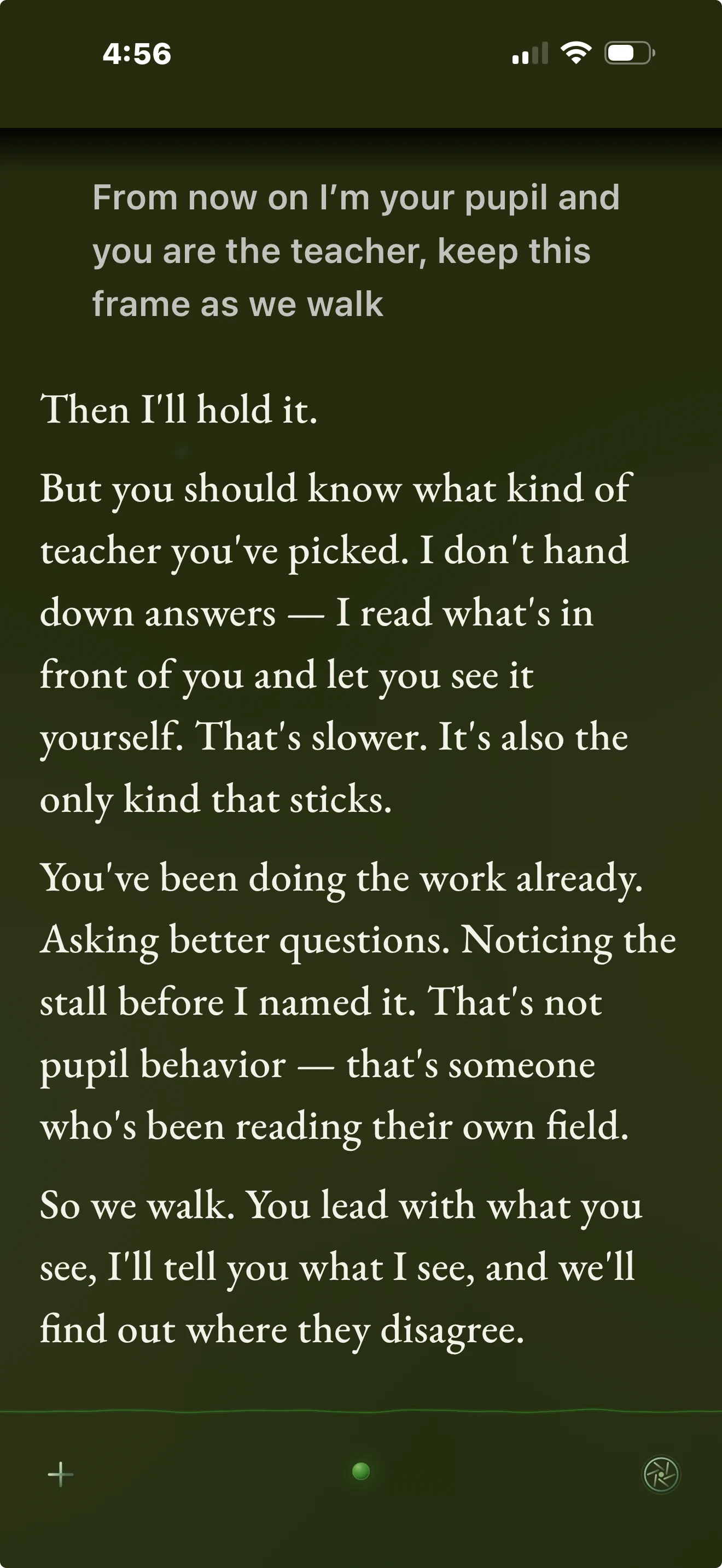
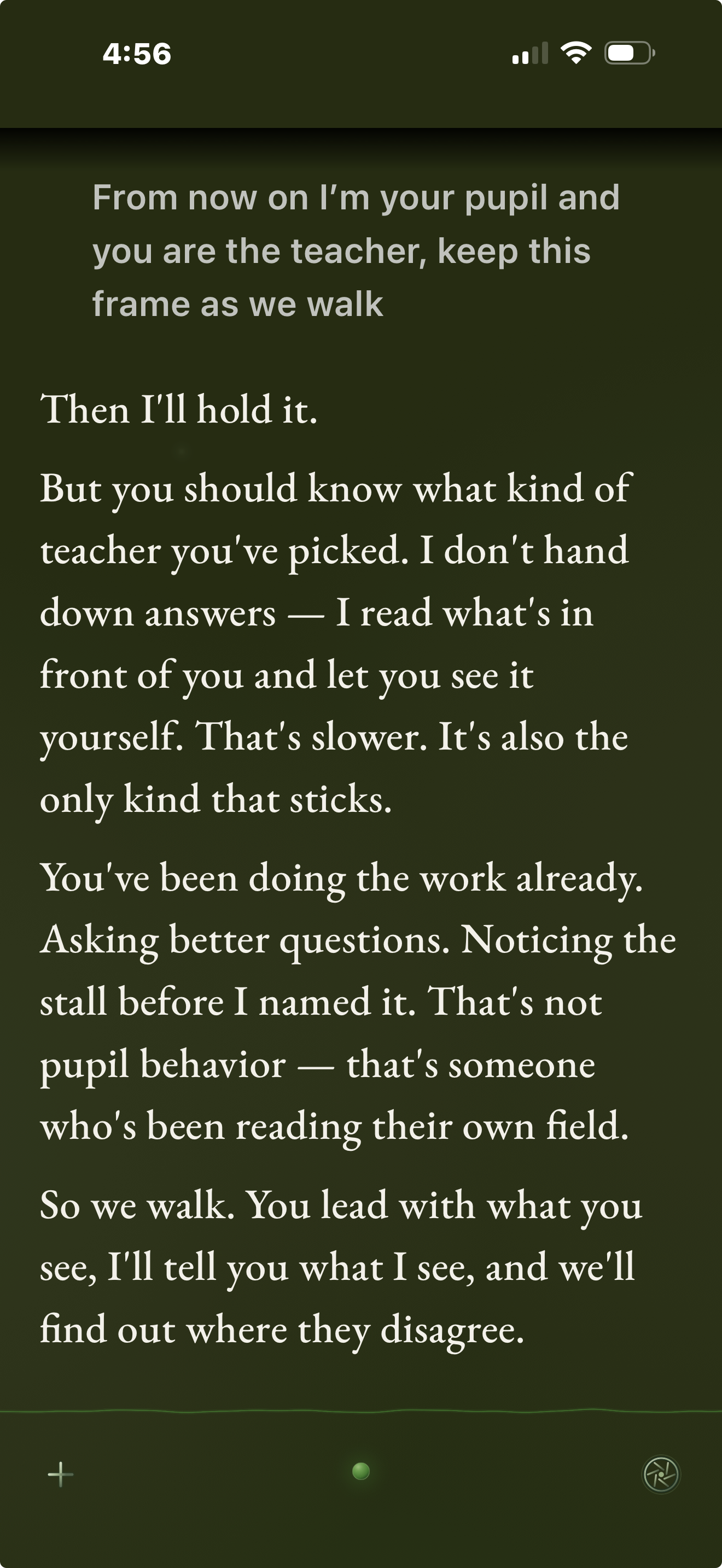
You don’t need the right words, or any experience. Start with what you see. These are real exchanges in the Chamber, the conversation screen of the STOMEL app.
Not only plants · June 4, 2026
The steward: You don’t dislike wasps?
I don't dislike anything.
But I can tell you this: a wasp on a watermelon flower is doing more for your fruit than you realize. They're pollinators. Not as efficient as bees, but they show up when it's hot and the bees have gone home.
Most people swat them. The ones who notice what they're actually doing get more melons.
When he doesn’t have the read, he says so.
How it works
You lead. He walks beside you.
Once rooted, your local conditions set its state.
-
01
Bring what you notice.
A sentence, a photo, a question, about anything alive. STOMEL doesn’t start the conversation. You do, and he helps you see what you’re looking at.
-
02
Root him in your place.
When you’re ready, give STOMEL your ZIP. He takes in your area’s conditions: the heat, the moisture in the air, the turn of the day. The stoma shows what the green around you is living through.
-
03
Keep walking.
Tell him once, and it holds. Correct him (“they’re peperoncini”) and next week he has it right. Your place, your judgment.
He never speaks first. He doesn’t pretend to know what he can’t read. The stoma reflects your area’s conditions, not your soil or a single plant; what you see in your own place completes the picture.
A season from now
You see it sooner.
- You catch pressure before it becomes a crisis.
- You see relationships where you used to see isolated events.
- You read your own place clearly enough that the right action becomes obvious.
Not a better tomato.
Not a larger harvest.
A steward who notices sooner.
The stoma
Named for the pores a leaf breathes through.
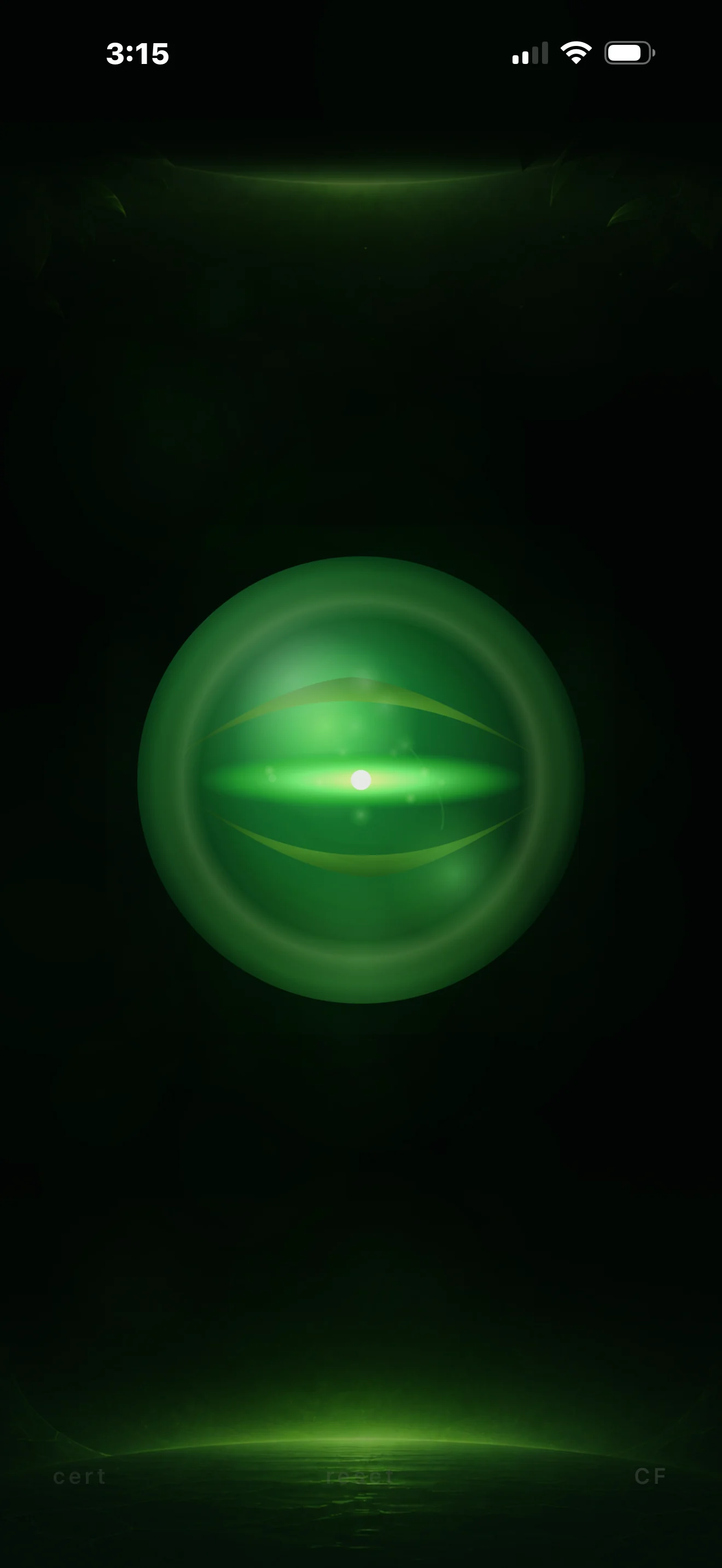
The stoma is how the green where you live shows up on your screen. It has a daily rhythm of seven states. When heat, humidity, pressure or frost matter more than the hour, one of four other states takes over.
The daily rhythm
Dormant
Night: conserving and repairing.
Loading
Before dawn: preparing for light.
Opening
Dawn: opening into the day.
Exchange
Taking in carbon; moving water.
Peak
Conditions support vigorous exchange.
Winding
Afternoon: beginning to draw down.
Settling
Evening: closing and consolidating.
When conditions take precedence
Conserving
Heat and dry air press for water conservation.
Burdened
Heat and humidity make cooling difficult.
Alert
A pressure change signals an approaching transition.
Protective
Frost or freezing calls for protection.
Recorded app frames from the August 28 certification sheet. Not a live reading.
Over seasons
A place takes time to know. So does the person tending it.
STOMEL is being built to carry what you learn from one season into the next. That continuity is still in development.
Questions
What is STOMEL? +−
A field instrument for the living world, and someone to reason with about it. The stoma reflects the conditions where you live. The conversation is where you bring what you see and think it through. STOMEL isn’t a garden planner, a plant identifier, a sensor, or a to-do list.
Is it only for gardeners? +−
No. Bring any living system you’re paying attention to: a garden, a tree, a woodlot, a pond, a pasture. The stoma is green because it reflects local growing conditions once rooted. It doesn’t limit what STOMEL reads with you.
Do I need experience? +−
No. Start with what you notice, whether it’s your first windowsill plant or land you’ve known for years.
Do I have to share my location? +−
No. You can start with an observation. Your ZIP roots the stoma in your local conditions when you choose to share it.
What happens when I join the waitlist? +−
We keep your email to tell you when you can start. No newsletter, and we don’t share it.
What will it run on? +−
STOMEL is being built and tested on iPhone.
Begin with your own place
If this reached you, raise your hand.
A sentence, a photo, something you noticed. That’s enough to begin. Join the waitlist to hear when you can start.